

In building and industrial insulation, the terms cellular glass and foam glass are often used. Both generally refer to foam glass, an inorganic insulation material made from glass and processed into a rigid structure containing numerous closed cells. The difference between the two terms is mainly related to naming conventions rather than fundamental material composition. When evaluating a product, its technical specifications and intended application matter more than the name alone.
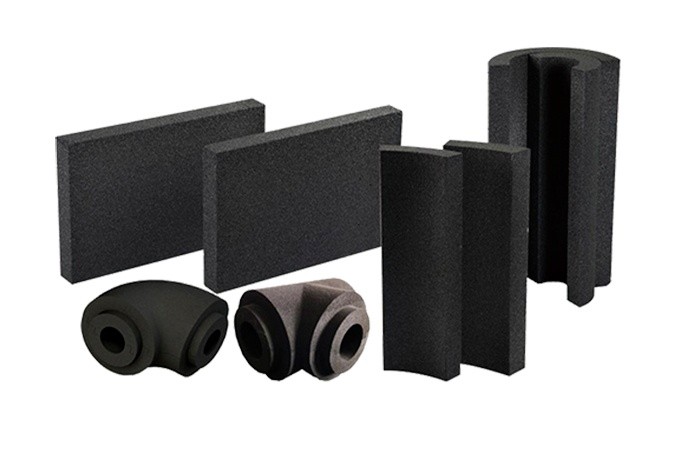
Cellular glass emphasizes the material's internal cellular structure. During manufacturing, glass is processed and expanded to form numerous independent closed cells. This structure gives the material its insulation properties and mechanical strength.
Foam glass more directly describes the process and result of foaming glass into a porous material. It also features a rigid, closed-cell structure and is commonly used for thermal insulation in buildings and industrial facilities.
In most building and industrial applications, these two terms refer to the same material. However, products from different manufacturers may vary in density, thermal conductivity, compressive strength, and operating temperature.
The terms are frequently used interchangeably because of differences in terminology and industry conventions:
1. Different structural emphasis: Cellular glass highlights the material's closed-cell structure, while foam glass describes its foamed glass form.
2. Different naming conventions: Technical documents, industry standards, and market materials may use different terms for the same material.
3. Different product specifications: Even when products share the same name, their density, thermal performance, compressive strength, and service temperature may vary.
▹ For this reason, buyers and engineers should evaluate technical specifications and test reports rather than relying on product names alone.
Both materials generally offer the following properties:
| Property | Main Characteristics | Typical Application Benefits |
|---|---|---|
| Thermal insulation | Closed-cell structure helps reduce heat transfer | Insulation for pipes, equipment, and buildings |
| Moisture resistance | Closed cells contribute to low water absorption and water vapor permeability | Suitable for environments requiring moisture control |
| Fire performance | Glass-based inorganic material with non-combustible properties | Suitable for applications with fire safety requirements |
| Dimensional stability | Rigid structure helps maintain its shape | Helps reduce problems caused by insulation deformation |
| Compressive strength | Can withstand certain mechanical loads | Suitable for some load-bearing insulation systems |
These are general characteristics of foam glass. Actual performance depends on the raw materials, foaming process, product density, and quality control. Products should not be assumed to have identical performance simply because they share the same material name.
Since foam glass and cellular glass generally refer to the same material, they do not have strictly separate application boundaries. The following sections introduce common uses in different engineering fields.
In building insulation, foam glass can be used in roofs, walls, foundations, and underground structures.
1. Roof insulation: Used in roof insulation systems to help reduce heat transfer between indoor and outdoor environments.
2. Foundations and underground structures: Suitable for underground projects where both thermal insulation and moisture resistance are required.
3. Building envelope insulation: Can be incorporated into wall insulation systems, depending on the project design.
In industrial insulation, cellular glass is often used in equipment and piping systems that require thermal insulation, moisture resistance, and structural stability.
1. Industrial piping: Used to insulate process pipes, including certain low- and high-temperature applications, depending on the product's permitted service temperature.
2. Tanks and equipment: Applied to the external insulation of storage tanks, vessels, and industrial equipment.
3. Cryogenic applications: Can be used for insulating pipes and equipment in low-temperature storage and transportation systems, including liquefied natural gas (LNG) facilities. Product selection must meet the specified design temperature and engineering requirements.
▹ These examples do not mean that foam glass is limited to building applications or cellular glass to industrial uses. The appropriate choice depends on the actual operating conditions and product specifications.
Regardless of whether a product is labeled cellular glass or foam glass, several technical parameters should be checked before selection:
1. Thermal conductivity: Evaluate the insulation performance and consider the actual operating temperature.
2. Compressive strength: Confirm that the material can withstand the loads associated with the installation method and service environment.
3. Water absorption: Assess its suitability for humid or moisture-sensitive environments.
4. Service temperature range: Make sure the product can withstand the actual temperatures of the pipes, equipment, or building structures.
5. Applicable standards and test reports: Verify that the product meets the technical requirements of the project.
Cellular glass and foam glass generally refer to the same insulation material rather than two fundamentally different products. For building and industrial projects, selection should be based on material structure, technical performance, product consistency, and operating conditions—not simply the name on the product label.

Copyright © 2025ZHEJIANG ZHENSHEN INSULATION TECHNOLOGY CORP.LTD. All rights reserved. 网站备案/许可证号:浙ICP备16010266号-1